

Welding at OCTÉ Industry
In metal fabrication, the quality of a welded part depends on two factors: having the right processes available and knowing how to select the best one for each specific requirement. OCTÉ Industry utilizes a range of equipment sized to handle diverse demands, from small components to large-scale parts.
Six welding bays for high production capacity
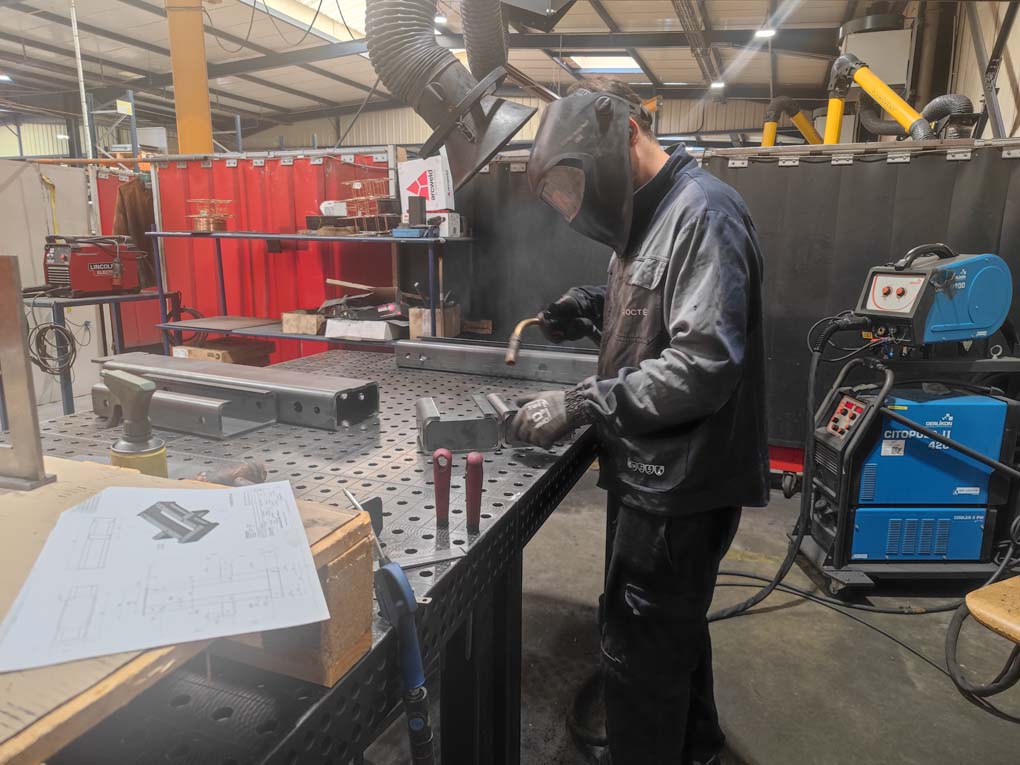
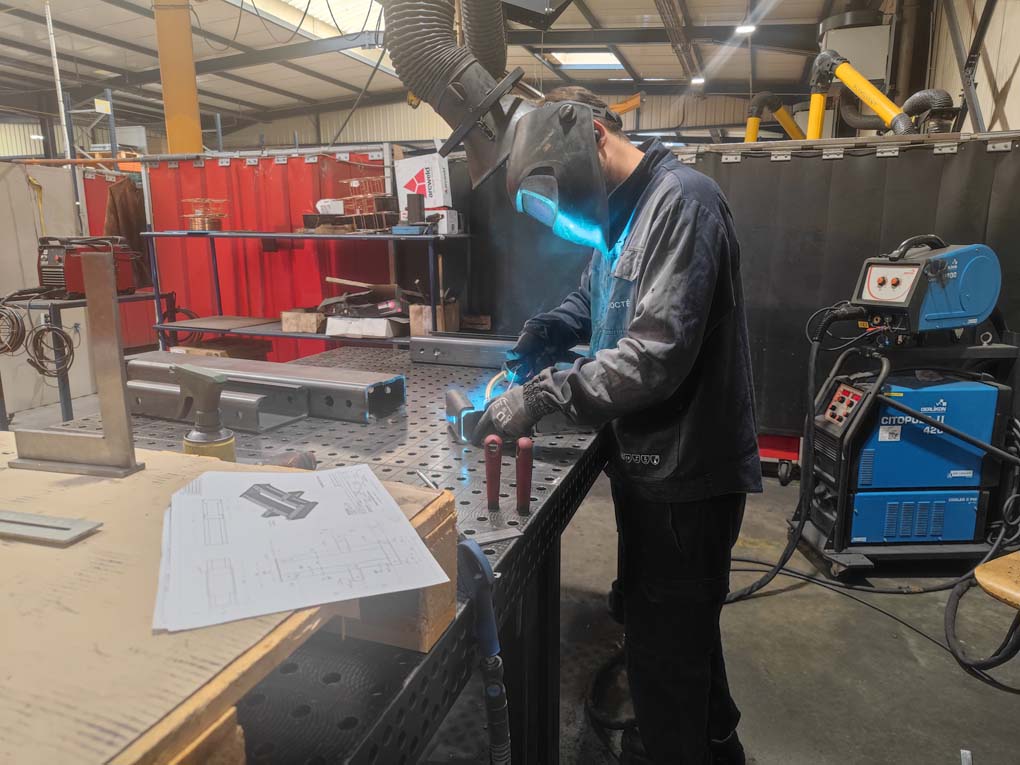
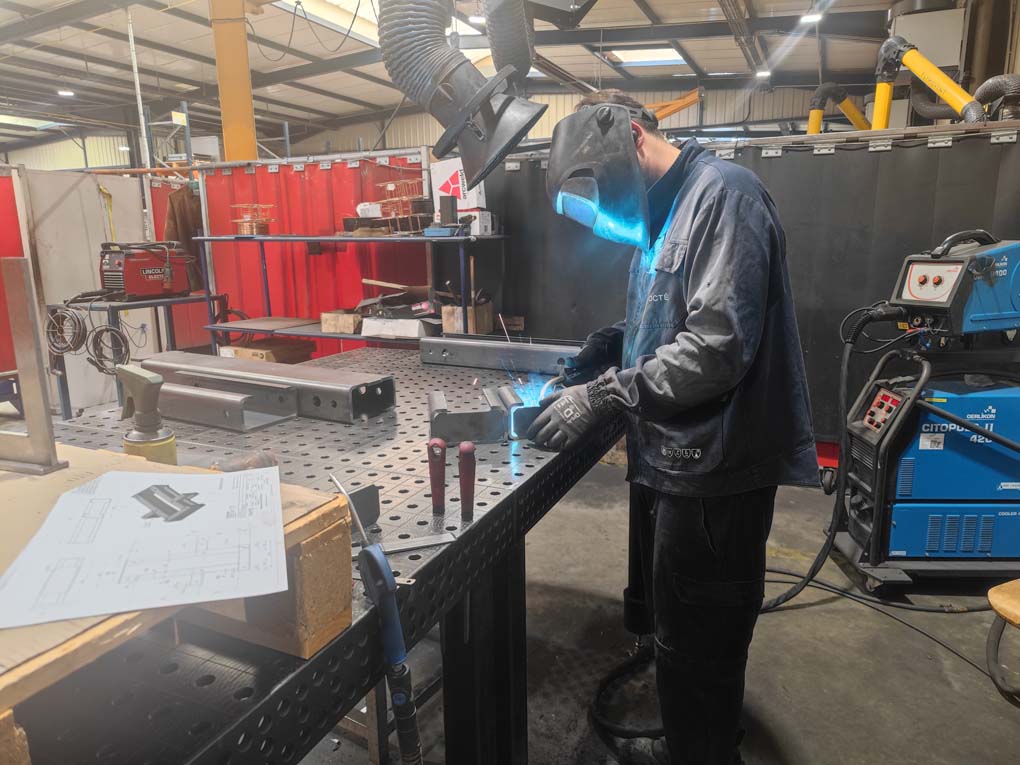
The welding area features six fully equipped and secure welding bays. This setup allows for multiple production runs to take place in parallel, enabling the team to manage peak workloads and meet deadlines, while ensuring each operator has a dedicated, well-suited workstation.
Four mastered processes: MIG, MAG, TIG, and spot welding
Beyond sheer capacity, the workshop’s strength lies in its versatility. The teams are proficient in four complementary processes: MIG welding, MAG welding, TIG welding—ideal for assemblies requiring finesse and precision—and spot welding for joining sheet metal. Each part is crafted using the process best suited to its material, thickness, and intended end-use.
MAG welding: the process for robustness
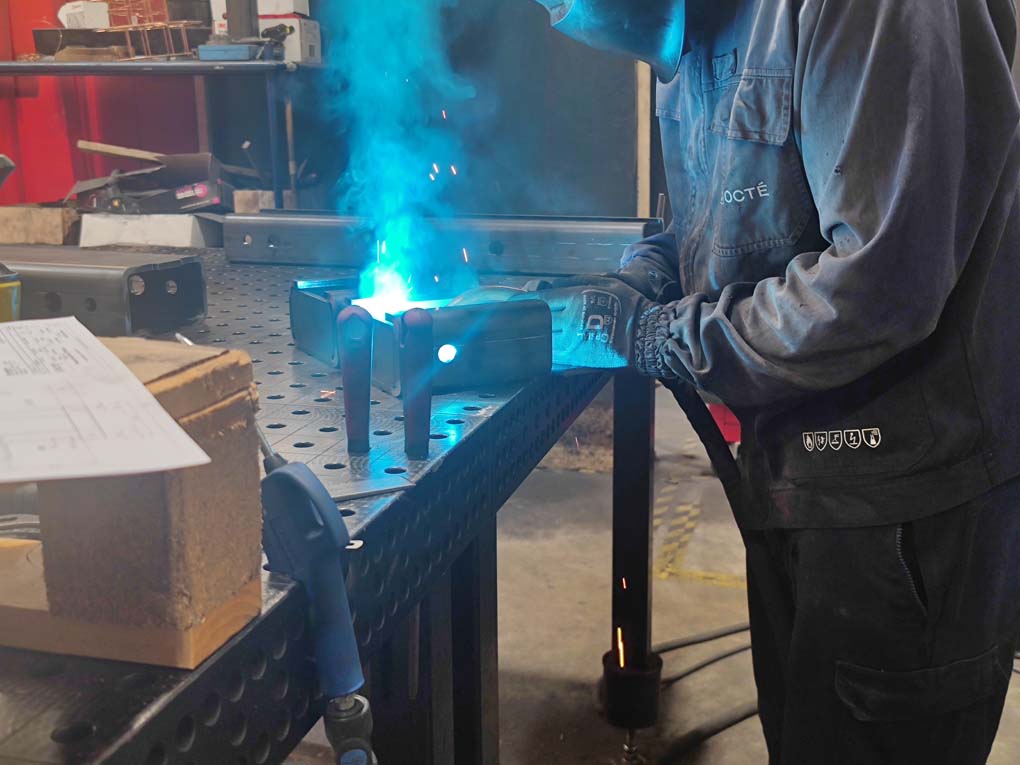
Among these methods, MAG welding is the workshop’s preferred choice for parts that must withstand significant mechanical stress. As a semi-automatic process using a consumable wire in an active gas atmosphere, it is well-suited for welding thick, large-scale components, delivering strong weld beads and high productivity. It is the natural choice whenever mechanical strength is the primary requirement.
Its versatility is further demonstrated by its ability to cover a wide range of applications, including frames, chassis, supports, structural frameworks, and complex welded assemblies. By mastering this single process, the team is able to address a broad spectrum of client needs.
Concrete example: the fabrication of a welded metal structure
A welded metal structure is an excellent illustration of this expertise. Every component follows a carefully controlled path, from the initial blueprint to the final assembly.
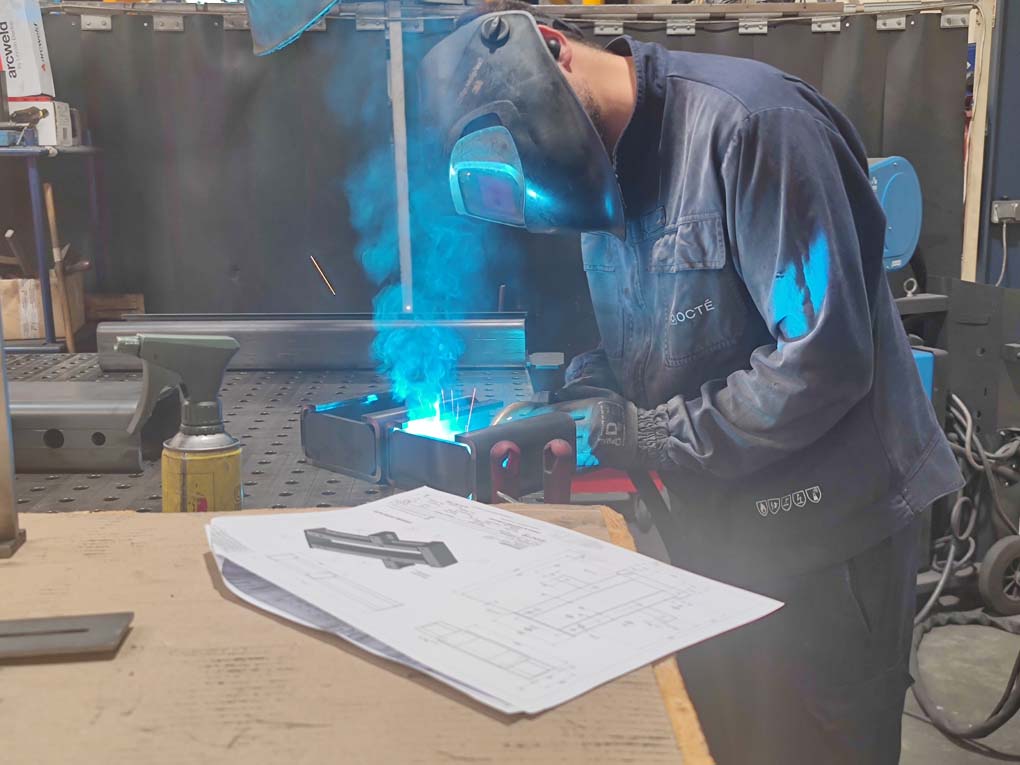
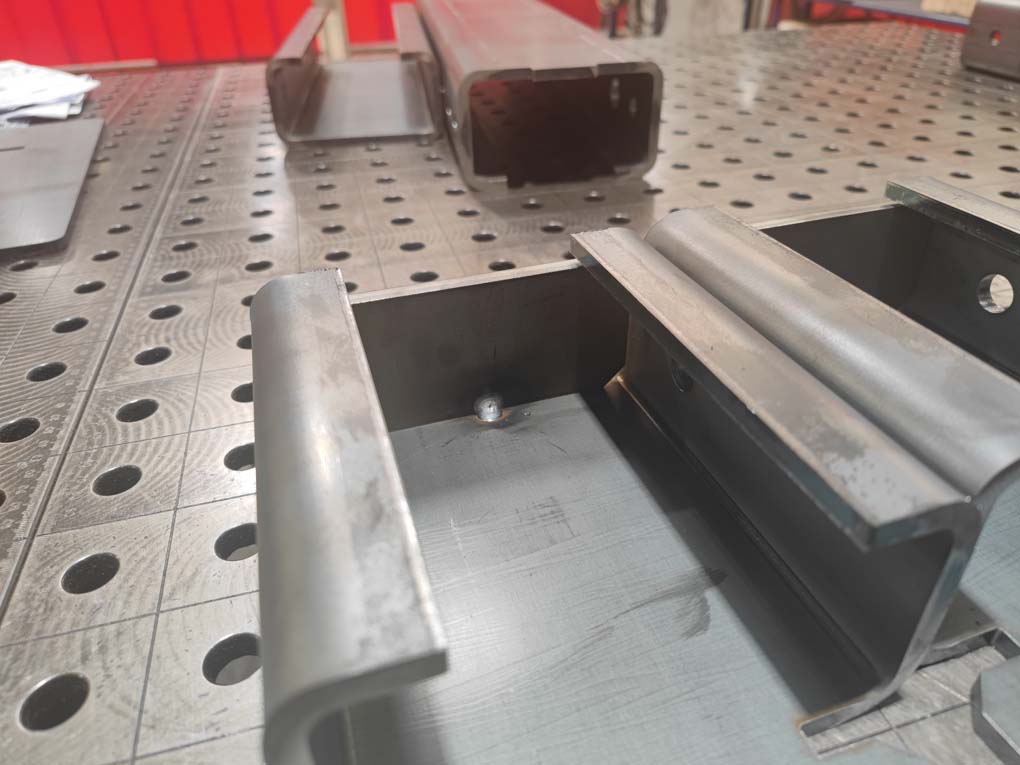
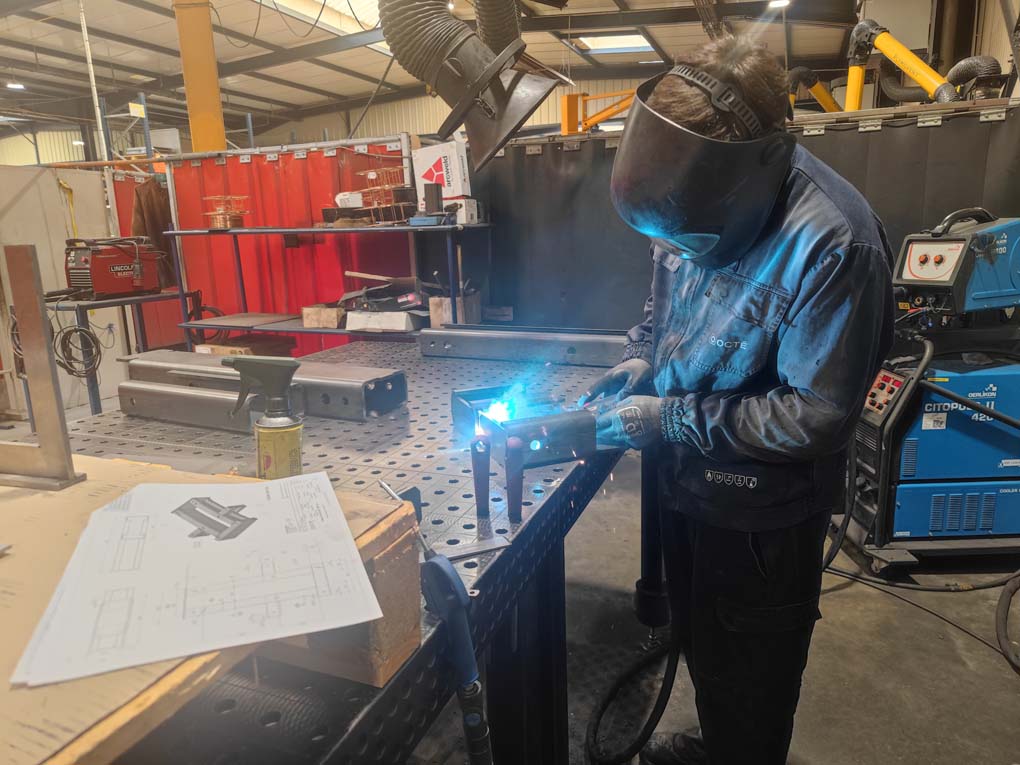
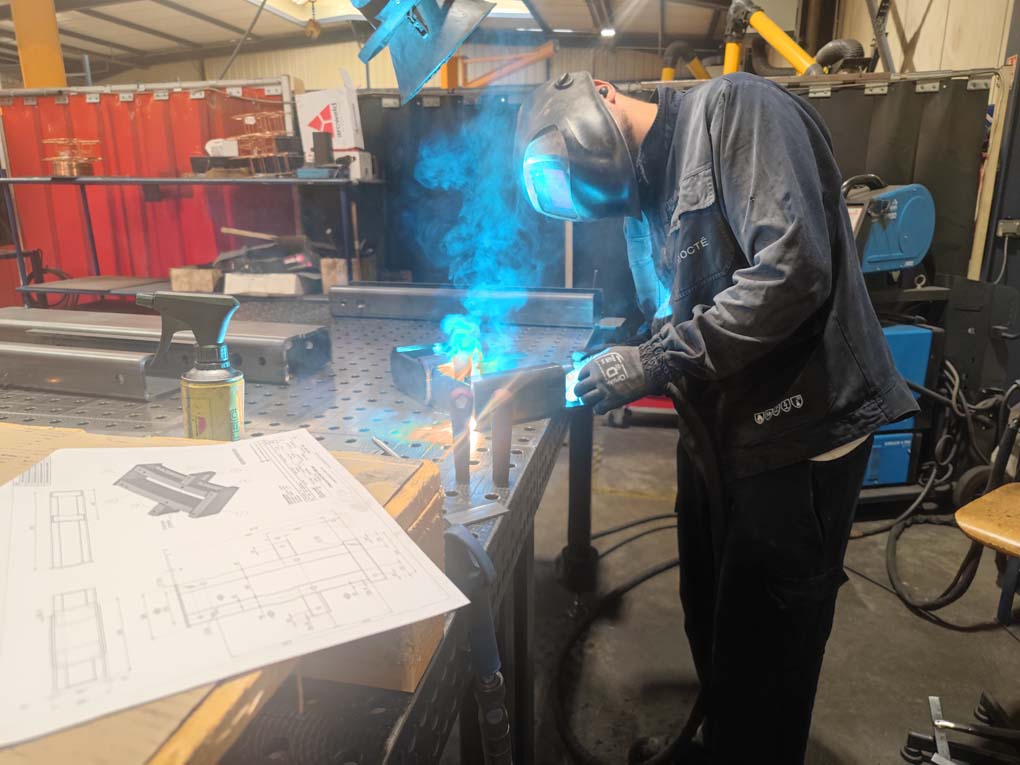
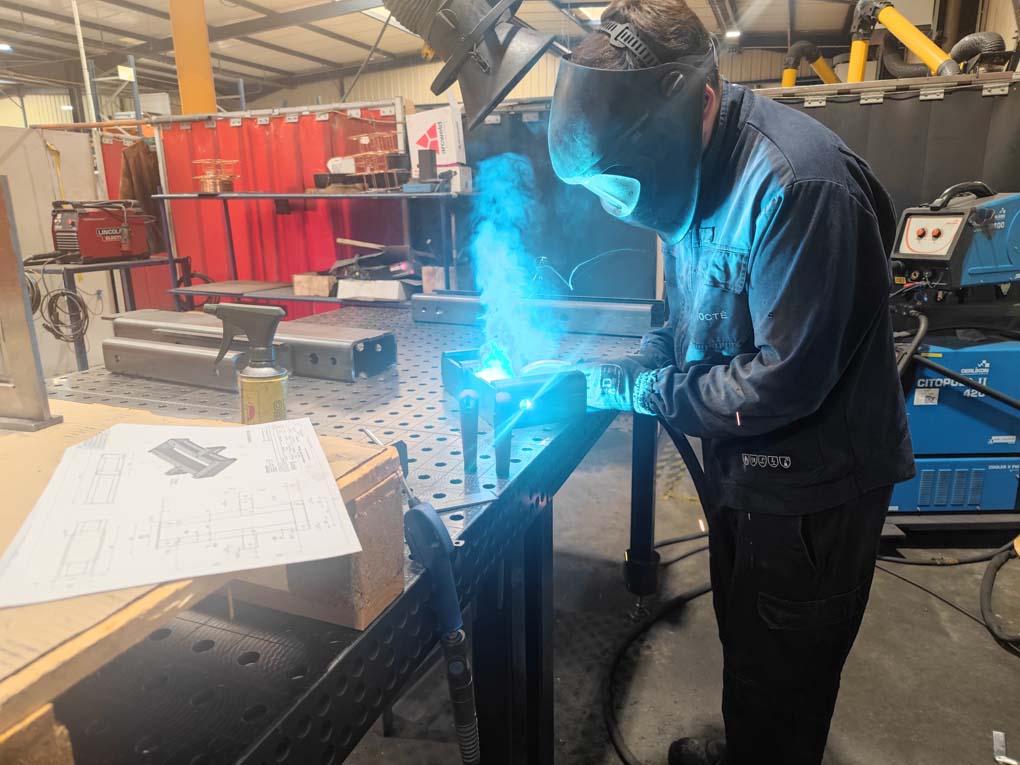
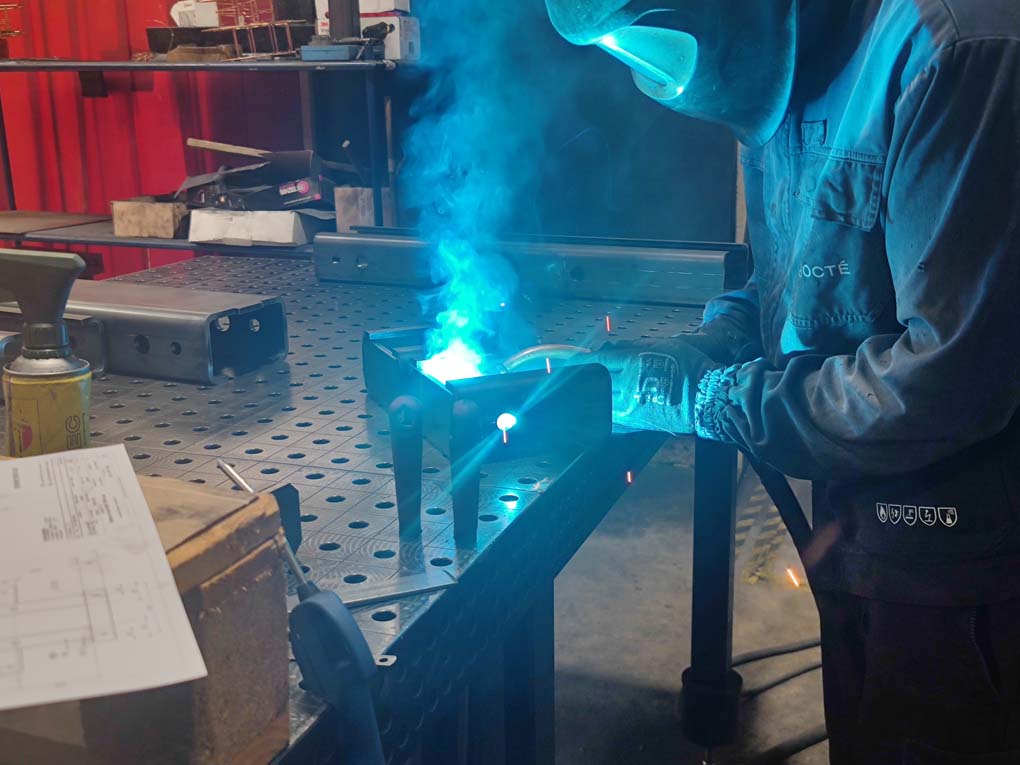
The operator begins with the fabrication drawing, positions the elements on a perforated welding table, and secures them with clamps. Next, they perform “tack welding”—applying small, temporary welds that lock the geometry in place, minimize heat-induced distortion, and allow for dimensional checks before the final welding takes place.
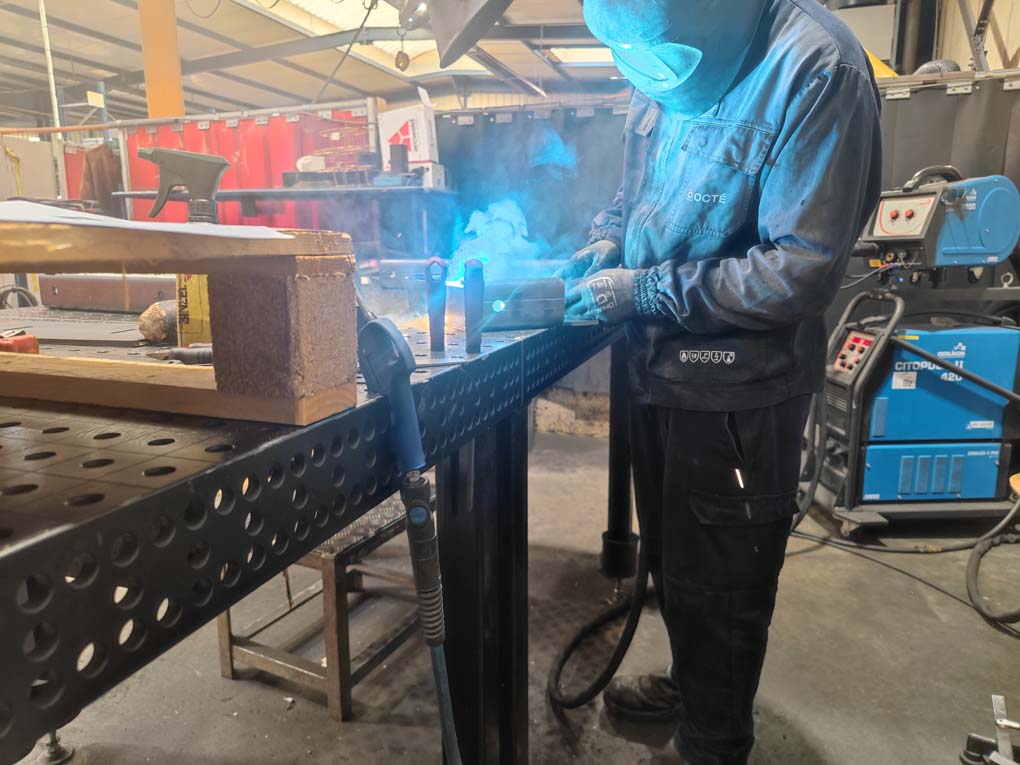
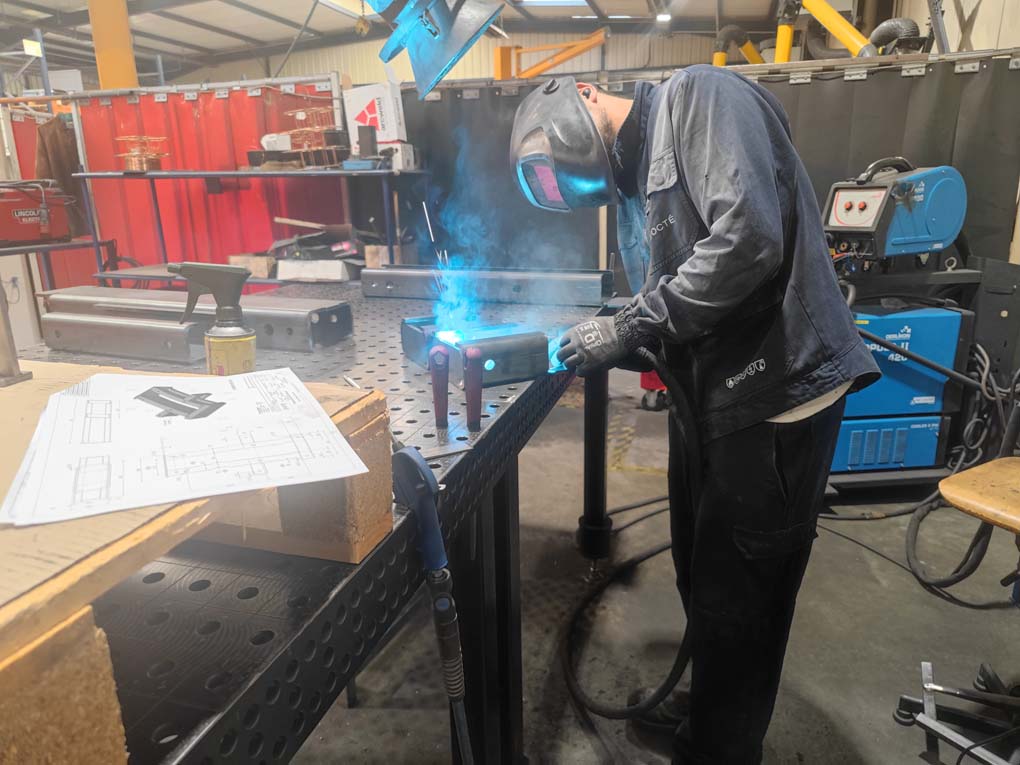
This is followed by the MAG welding process itself. A steady, consistent technique—in terms of travel speed, torch angle, and wire feed—ensures a uniform weld bead, which is essential for the long-term structural integrity of the assembly. Finally, the component is fitted into the overall assembly prior to painting, ensuring a precise fit and full compliance with the original specifications.
A workshop designed with safety in mind
Each welding station is equipped with fume extraction arms and protective curtains. Operators use personal protective equipment (PPE) specifically designed for the risks associated with welding, including helmets, gloves, and specialized protective clothing. Safety is an integral part of the entire manufacturing process.
Expertise at the service of your projects
With robust production capacity, a versatile range of processes, and mastery of MAG welding for heavy-duty components, OCTÉ Industry is equipped to handle a wide variety of fabrications—from thin sheet metal parts to large-scale welded structures—delivering components that strictly adhere to your blueprints and are ready for the next stage of production.